


Halloween Belongs
From Samhain to guising to Rocky Horror: a short history of Halloween, and why the holiday has always belonged to the weird, the masked and the people at the edges.
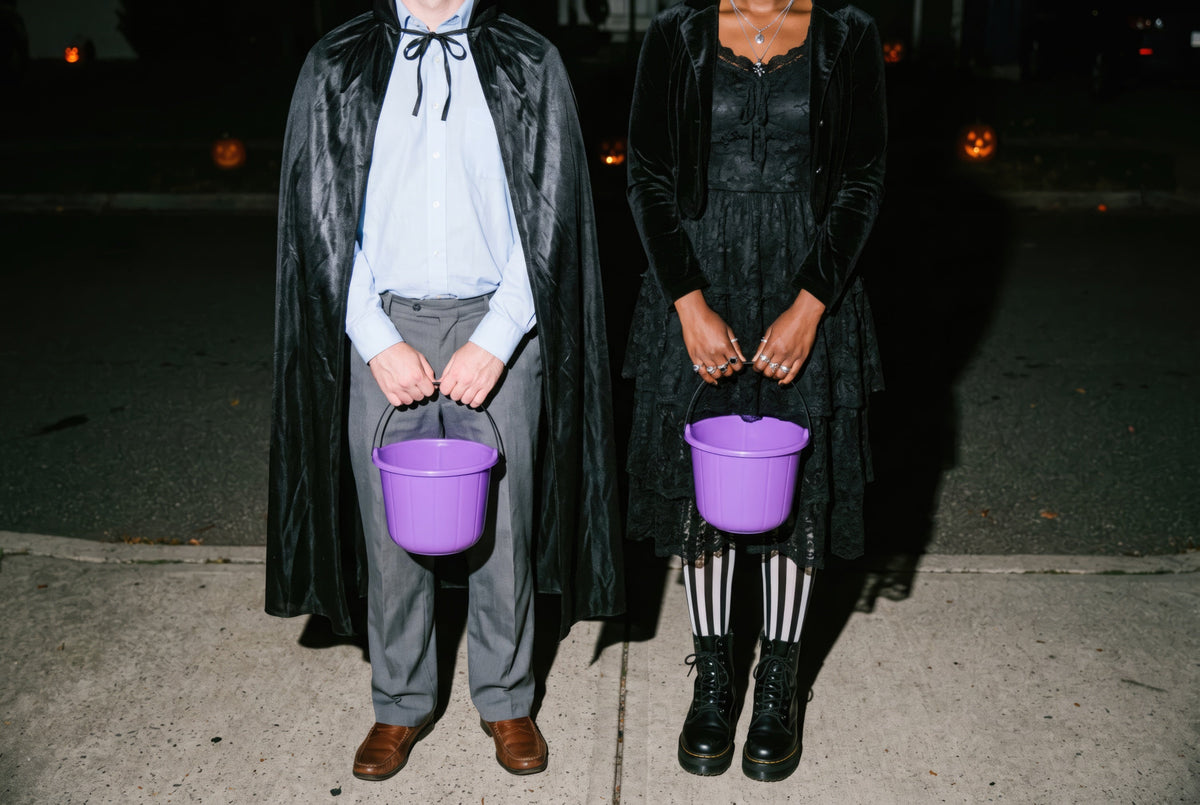
Once a year, the rest of the world borrows our clothes.
The accountant down the street paints his face white. The girl from HR wears a black lace veil to the office. Your cousin, the one who calls your wardrobe "a lot," shows up to the party in fishnets and a cape and spends four hours being complimented. For one night, being strange is the assignment instead of the problem.
And those of us who dress like this in March? We just get to feel, briefly, like everyone finally read the memo.
We used to find that a little annoying. Now we find it kind of moving. Because when you dig into where Halloween comes from, it turns out the holiday was always ours. The weird, the masked, the people living at the edges. Everybody else is just visiting.
It Started at the Edge of the Year
The roots go back to Samhain, the Gaelic festival that marked the end of the harvest and the beginning of the dark half of the year. It was a threshold night, neither summer nor winter, when the boundary between the living and the dead was believed to be at its thinnest. Spirits could cross over. So could everything else.
Think about that for a second. The original Halloween was a celebration of the in-between. Not one thing or the other. The liminal, the undefined, the doorway. If you've ever felt like you don't fit cleanly into any category, congratulations. You're the reason for the season.

The First Costumes Were Disguises
In parts of Scotland and Ireland, people went "guising": dressing in disguise and going door to door, performing a song, a poem, or a trick in exchange for food. Some traditions held the costumes were protection, so wandering spirits would mistake you for one of their own.
Read that again. The first Halloween costume was a way to blend in with the monsters. Not to mock them. To be mistaken for them. Weirdos have been doing that our entire lives.

The first Halloween costume was a way to blend in with the monsters.
America Turned It Into Chaos, Then Candy
When the tradition crossed the Atlantic with Irish and Scottish immigrants, it got rowdy. By the early 1900s, Halloween in American towns meant pranks, mischief, and the occasional outhouse tipped over. Communities eventually pushed trick-or-treating as a way to channel all that energy into something a little more polite, and after World War II it became the candy-and-doorbells holiday we know now.
But look at the bones of it. A night when the rules loosen. When kids roam the streets in the dark. When strangers open their doors to masked visitors. It's the most anarchic thing America does on purpose.

The Night Everyone Could Be Themselves
For queer communities, Halloween has long been called the gay high holiday, and for good reason. For decades, a costume was cover. On October 31st you could wear the dress, the makeup, the whole fantasy, and if anyone asked, it was just a costume. For a lot of people, it was the one night of the year they could walk outside as themselves.
The Village Halloween Parade in New York started in 1974, when a puppeteer named Ralph Lee walked his giant puppets through the streets of Greenwich Village. It grew into one of the biggest Halloween celebrations on earth, built by artists, outsiders, and anyone who wanted to be seen.

And Then Came the Freaks in the Dark
In 1976, a small movie flop started playing at midnight at the Waverly Theater in New York, and something strange happened. People came back. Then they came back dressed as the characters. Then they started talking back to the screen. The Rocky Horror Picture Show became a ritual, a weekly Halloween for kids who didn't fit anywhere else.
Around the same time, punk and its spookier cousins were taking horror imagery and wearing it every day. Bands painted skulls on leather jackets. Goth clubs looked like a haunted house had a nightclub license. Horror punk turned B-movie monsters into anthems. For the subcultures, Halloween wasn't one day a year. It was a permanent aesthetic.


So What Do We Do With This?
Here's our small, sincere suggestion. This Halloween, notice the people who come alive in costume. The coworker who's never been louder. The friend who finally wears the thing she's been too shy to wear. The kid who's a vampire for the third year running and has no plans to stop.
Then ask yourself why that only gets to happen once a year.
We don't think everyone needs to dress like a Victorian widow on a Tuesday (although we'd love that for you). But we think Halloween shows us something true. People are weirder than they let themselves be. Most of them are waiting for permission.
We can be that permission. Every day you show up as your strangest self, in the striped tights, the bat earrings, the skirt your mother has opinions about, you're keeping the porch light on for someone who isn't ready yet.

So to all the weirdos who've been Halloween all year long: happy holidays. This is our night. We're just generous enough to share it.
Halloween All Year
For the ones who never took the costume off.


Shop Gothy ThingsShop Where the Witch Things AreShop patches