


RIOT GRRRL TO RIOT GIRL
Riot grrrl was a political movement with a dress code. Here's how the look went mainstream, and how to wear it like you mean it.
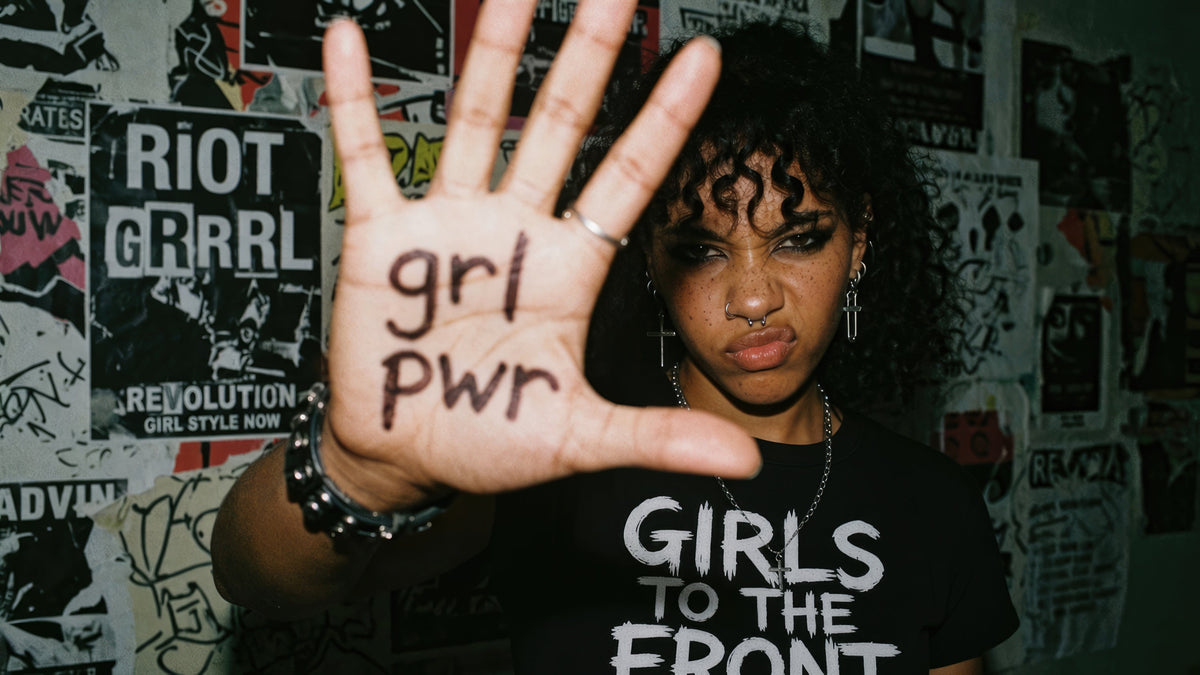
In 1991, a group of young women in Olympia, Washington decided that the punk scene they loved was not actually making room for them, so they built their own instead. They made zines. They formed bands. They wrote words on their arms and stomachs in marker and screamed them back at rooms full of people who had used those words as weapons. They called it riot grrrl, and for a specific and electric moment, it was one of the most genuinely radical things happening in American culture.
You can now buy the aesthetic at fast fashion retailers in seven colorways. Let's talk about how that happened, what it means, and what you can do about it, because there are things you can actually do.
WHAT IT ACTUALLY WAS
Riot grrrl was not primarily a fashion movement. It was a political one that happened to have an extremely specific visual language. Bands like Bikini Kill, Sleater-Kinney, Heavens to Betsy, and Bratmobile were making music that was loud and messy and explicitly about things women were not supposed to say out loud. The style was inseparable from the message.
The baby doll dress over combat boots was not cute. It was a deliberate collision between the feminine and the aggressive, between the way women were expected to present and what was happening underneath. The written words were reclamation: ugly words taken back and weaponized by the people they had been used against. Nothing was decoration. Everything meant something. If you could not say what it meant, you were missing the point.


THE EXTRACTION PROCESS
The co-option of subculture aesthetics by mainstream fashion follows a pattern so predictable it has been written about extensively by people smarter than any trend forecaster. A marginalized community creates something out of necessity and genuine feeling. It gets photographed by outsiders. It gets labeled and packaged. It gets reproduced at scale with the context removed, because context does not fit on a hangtag.
The clothes remain. The conviction is considered optional. The people who built the aesthetic are left watching their specific language become a general-purpose costume, available to anyone who wants the look without the knowledge, the history, or the actual willingness to be inconvenient.

This happened to punk in the 1980s. It happened to grunge in the 1990s. It happened to riot grrrl not long after that. It will keep happening, because the fashion industry's relationship to subculture is essentially extractive. This is not a surprise. It is just a thing you should know.
WHY IT MATTERS THAT YOU KNOW
Nobody is going to revoke your right to wear a band tee for a band you have never heard. Fashion borrowing is ancient and mostly fine. The problem is not wearing something. The problem is wearing something as a costume while remaining completely incurious about what it means, where it came from, and who built it.
The riot grrrl movement happened because women were being pushed to the edges of spaces they had helped create, and they pushed back, loudly, in a specific historical moment with specific cultural stakes. That context does not disappear just because the fashion got separated from it. When you wear it without the context, you are participating in the erasure of the thing that made it worth wearing in the first place.
WHAT YOU CAN ACTUALLY DO
Learn the history. Bikini Kill's discography is on streaming. So is Sleater-Kinney's. The zines are archived. The documentaries exist. Thirty minutes of genuine curiosity will change the way you relate to the aesthetic. This is not a lot to ask.

Buy with intention. Punk was always DIY. The jacket covered in patches and pins that you assembled yourself over years is the real thing. The pre-distressed version from a chain store is the souvenir. Our patches and pins are designed for people building the real version, piece by piece, with actual knowledge of what each piece is saying. Add your own signal.
Wear things that require explanation. The specific reference. The obscure band. The political pin that makes someone ask a question you are prepared to answer. The riot grrrl spirit is not dead. It is in every woman who refuses to be palatable and dresses like she means it.
SHOP THE RIOT
"Girls to the front" was Kathleen Hanna's command from the stage at Bikini Kill shows, calling the women in the crowd up past the mosh pit so they could actually see. It's still the best dress code we know. Start your jacket, or just wear the order on your chest.


